
11 Amazing Facts About the Statue of Liberty History
By Trivia Daily, Staff Writer — Published November 14, 2026
Table of Contents
- Key Takeaways
- Exploring the Statue Liberty History Through Little-Known Origins
- The Engineering Marvel Behind the Green Giant
- Symbolic Details Most Visitors Never Notice
- 11 Amazing Facts That Reveal Hidden Stories
- Frequently Asked Questions
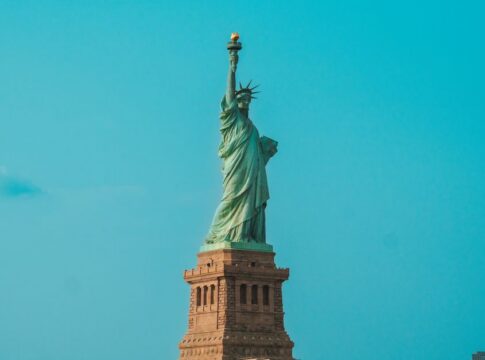
Standing tall in New York Harbor, the Statue of Liberty has welcomed millions of immigrants and visitors for more than a century. But beyond its iconic silhouette, the statue liberty history is filled with surprising engineering feats, fascinating trivia, and stories that challenge what most people think they know. From its original color to the mysteries hidden inside its copper shell, Lady Liberty holds secrets that continue to amaze and inspire curiosity about this remarkable monument.
Whether you’re planning a visit or simply love discovering interesting facts about American landmarks, these eleven revelations will transform how you see this towering symbol of freedom.
Key Takeaways
- The Statue of Liberty was originally a shiny copper color and gradually turned green over decades of natural oxidation.
- France gave the statue to the United States, but Americans had to fund and build the pedestal themselves through a grassroots fundraising campaign.
- The statue’s torch-bearing right arm was displayed at the 1876 Centennial Exposition in Philadelphia before the full monument was completed.
- Lightning strikes the statue approximately 600 times each year, but its copper skin and iron framework safely conduct the electricity.
- The broken chains at Liberty’s feet symbolize freedom from oppression, though most visitors never see them from ground level.
- The statue served as a functioning lighthouse for sixteen years after its dedication.
Exploring the Statue Liberty History Through Little-Known Origins
The idea for the Statue of Liberty emerged from a dinner conversation in France during the 1860s. French political thinker Édouard de Laboulaye proposed creating a monument celebrating American independence and the abolition of slavery. Sculptor Frédéric Auguste Bartholdi embraced the vision and spent years designing the colossal figure. The French people funded the statue itself through donations, theatrical performances, and a lottery, while Americans were responsible for constructing the pedestal.
This transatlantic collaboration nearly fell apart. When fundraising for the American pedestal stalled, newspaper publisher Joseph Pulitzer launched an aggressive campaign in his publication, shaming wealthy donors and appealing to everyday citizens. His efforts worked. More than 120,000 contributors donated what they could afford, many giving less than a dollar. The statue became a truly democratic monument, built by the contributions of ordinary people rather than elite benefactors alone.
The Engineering Marvel Behind the Green Giant
Gustave Eiffel, who would later design the famous Eiffel Tower, engineered the statue’s internal iron framework. His innovative pylon and secondary skeletal structure allows the copper skin to move independently from the interior support. This ingenious design lets the statue sway up to three inches in strong winds and the torch to move five inches, preventing structural damage during storms.
The copper sheets forming Liberty’s exterior are remarkably thin—less than the thickness of two pennies stacked together. Despite this delicate construction, the statue weighs approximately 225 tons, with the copper skin alone accounting for about 88 tons. The framework and foundation contribute the remaining weight, creating a structure that has withstood hurricanes, nor’easters, and more than a century of harsh coastal weather.
Symbolic Details Most Visitors Never Notice
Every element of the Statue of Liberty carries symbolic meaning. The seven spikes on her crown represent the seven continents and seven seas, emphasizing the universal concept of liberty. The tablet she holds bears the date July 4, 1776, in Roman numerals. Her classical robe recalls ancient Roman goddesses of freedom, connecting American democracy to classical republican ideals.
At her feet lie broken shackles and chains, symbolizing liberation from tyranny and oppression. Bartholdi positioned these chains deliberately, but the statue’s height makes them nearly impossible to see from the ground. Aerial photographs reveal this powerful detail that reinforces the monument’s message of freedom and the end of slavery.
11 Amazing Facts That Reveal Hidden Stories
1. The Statue Started Out Copper-Colored, Not Green
When dedicated in 1886, the Statue of Liberty gleamed with the reddish-brown color of polished copper. The familiar green patina developed gradually over approximately thirty years through natural oxidation. This copper carbonate coating actually protects the underlying metal from further corrosion, acting as a preservative layer. Proposals to restore the original copper color have been rejected because removing the patina would damage the statue and eliminate its protective barrier.
2. You Could Once Climb Into the Torch
For decades after its opening, visitors could ascend a ladder through Liberty’s arm and stand inside the torch, peering through windows in the flame. This access ended in 1916 after an act of sabotage damaged the arm’s structure. German agents detonated munitions on nearby Black Tom Island, and the explosion sent shrapnel into the statue. The torch has remained closed to the public ever since, though the original torch is now displayed in the monument’s museum.
3. France Shipped the Statue in 350 Individual Pieces
Transporting a 151-foot statue across the Atlantic Ocean required creative logistics. The French disassembled Liberty into 350 individual pieces and packed them into 214 crates. The frigate Isère carried this precious cargo to New York in 1885. Workers then spent four months reassembling the statue on its pedestal, matching each numbered piece like an enormous three-dimensional puzzle.
4. The Crown’s Windows Represent Precious Gemstones
The twenty-five windows in Liberty’s crown symbolize gemstones found on Earth and the heaven’s rays shining over the world. These windows also serve a practical purpose, allowing light into the crown’s observation area and providing ventilation in the cramped space. Visitors who climb the 354 steps to the crown are rewarded with panoramic views through these symbolic portals.
5. Liberty Served as an Active Lighthouse
From 1886 to 1902, the Statue of Liberty functioned as a navigational aid for ships entering New York Harbor. The torch originally contained electric lights visible up to twenty-four miles away, and the U.S. Lighthouse Board maintained the beacon. However, the statue proved ineffective as a lighthouse due to its location and the limited brightness of early electric lights, leading to its decommissioning.
6. The Face May Have Been Modeled on the Sculptor’s Mother
While Bartholdi never explicitly confirmed his inspiration, many art historians believe the statue’s serene facial features resemble those of his mother, Charlotte. The sculptor maintained a close relationship with her throughout his life, and the resemblance in surviving portraits is striking. This personal touch would have added intimate meaning to a monument celebrating universal ideals.
7. Liberty Wasn’t Always Associated with Immigration
The statue was originally conceived as a symbol of Franco-American friendship and shared republican values, not specifically as a beacon for immigrants. Its association with immigration developed organically as millions passed the statue while arriving at the nearby Ellis Island immigration station. Emma Lazarus’s poem “The New Colossus,” with its famous lines about “huddled masses yearning to breathe free,” was added to the pedestal in 1903, cementing Liberty’s identity as a symbol of welcome.
8. The Statue Has Been Struck by Lightning Roughly 600 Times Per Year
Liberty’s height and harbor location make her an attractive target for lightning strikes. The copper skin and iron framework create a natural lightning rod that safely channels electrical current into the ground. Engineers designed this protection intentionally, and the statue has never sustained serious lightning damage despite countless strikes over more than 135 years.
9. The Statue’s Full Name Is Rarely Used
Most people simply call it the Statue of Liberty, but the monument’s official name is “Liberty Enlightening the World.” This title reflects the statue’s original purpose as a celebration of enlightenment ideals—reason, freedom, and democracy—that both France and America embraced. The torch represents enlightenment itself, illuminating the path to liberty.
10. The Pedestal Contains a Sonnet That Redefined the Statue’s Meaning
Emma Lazarus wrote “The New Colossus” in 1883 to raise funds for the pedestal, but the poem wasn’t mounted inside until 1903. Her words transformed how Americans understood the statue, shifting emphasis from abstract republican ideals to concrete welcome for immigrants. Lines like “Give me your tired, your poor” became inseparable from Liberty’s identity, though Bartholdi designed the statue years before Lazarus penned these words.
11. The Right Arm Was Displayed Separately for Six Years
Before the complete statue arrived in America, the torch-bearing right arm was exhibited at the 1876 Centennial Exposition in Philadelphia. Visitors could climb inside the arm and torch for fifty cents, helping raise funds for the pedestal. The arm remained on display in New York’s Madison Square Park until 1882, giving Americans their first glimpse of the monument that would eventually grace their harbor.
Frequently Asked Questions
How long did it take to build the Statue of Liberty?
Construction in France took approximately nine years, from 1875 to 1884. After shipping to New York, reassembly on the completed pedestal required an additional four months, with the dedication ceremony held on October 28, 1886.
Why did the Statue of Liberty change color from copper to green?
The green patina resulted from natural oxidation of the copper skin when exposed to air and moisture. This chemical reaction created copper carbonate, which forms a protective layer that actually prevents further corrosion and helps preserve the statue.
Can you still go inside the Statue of Liberty?
Yes, visitors can enter the pedestal and, with advance crown reservations, climb to the crown’s observation area. However, the torch has been closed to the public since 1916 due to structural damage and safety concerns.
How many people visit the Statue of Liberty each year?
The monument attracts approximately 4 million visitors annually, making it one of the most visited attractions in the United States. Access to the crown is limited to roughly 240 people per day due to space constraints and safety regulations.
The Statue of Liberty continues to evolve in meaning while standing unchanged in form. Each generation discovers new significance in Bartholdi’s creation, proving that truly great monuments grow richer with time rather than fading into mere decoration. What will the next century reveal about this enduring symbol?