
The Truth About Oscars Statuette Gold Plating Worth
By Trivia Daily, Staff Writer — Published November 20, 2026
Table of Contents
- Key Takeaways
- What Makes Up the Truth About Oscars Statuette Construction
- The Wartime Exception That Proved the Rule
- Why Oscar Resale Values Defy Material Worth
- The Manufacturing Economics Behind Hollywood’s Icon
- Frequently Asked Questions
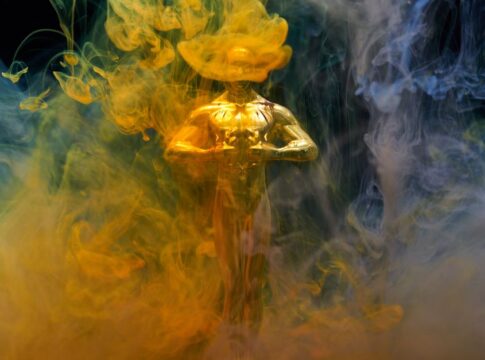
Every year, Hollywood’s biggest stars clutch that gleaming golden trophy with tears in their eyes, but the truth about the Oscars statuette might surprise you. That coveted Academy Award, standing just over 13 inches tall and weighing approximately 8.5 pounds, isn’t the solid gold treasure many imagine. The actual material value of the gold plating on an Oscar is surprisingly modest—worth only a few hundred dollars at most. This fascinating disconnect between cultural prestige and raw material cost reveals an interesting truth about value itself.
The statuette’s composition tells a story of practicality meeting symbolism. What appears to be pure gold is actually a bronze core with a thin layer of 24-karat gold electroplating. This manufacturing choice keeps production costs reasonable while maintaining the iconic appearance that has defined Hollywood excellence since 1929.
Key Takeaways
- The Oscar statuette is made primarily of bronze with 24-karat gold plating, not solid gold
- The gold plating on each statuette is worth only a few hundred dollars in raw material value
- The Academy of Motion Picture Arts and Sciences restricts resale, requiring winners to offer the statuette back to the Academy for $1 before selling elsewhere
- During World War II, Oscars were made of painted plaster due to metal rationing, later exchanged for proper bronze versions
- The statuette weighs about 8.5 pounds and stands 13.5 inches tall
- Despite low material value, black market Oscars have sold for hundreds of thousands of dollars due to their cultural significance
What Makes Up the Truth About Oscars Statuette Construction
The Oscar begins its life as britannium, a pewter-like alloy, which is cast into the familiar Art Deco figure of a knight holding a crusader’s sword. The base contains a bronze core. After casting, each statuette undergoes copper plating, then nickel plating, and finally receives its signature 24-karat gold finish through electroplating. This multi-layer process creates durability while achieving that unmistakable golden sheen.
The gold layer itself measures incredibly thin—typically only a few microns thick. To put this in perspective, a human hair is roughly 70 microns in diameter. This means the actual gold content represents a tiny fraction of the statuette’s total composition. If you melted down the gold plating from a single Oscar, you’d recover only a few grams of gold. At current gold prices, this amounts to approximately $400 to $600 in raw material value—hardly the fortune many assume.
The manufacturing process has evolved over the decades. R.S. Owens & Company in Chicago has been the primary manufacturer since 1982, producing each statuette through a detailed multi-week process. Before that, the Dodge Trophy Company handled production. Each Oscar requires careful craftsmanship, from initial casting through multiple plating stages and final polishing.
The Wartime Exception That Proved the Rule
History provided a curious experiment in Oscar materials during World War II. From 1942 to 1944, metal rationing made bronze unavailable for trophy production. The Academy pivoted to painted plaster statuettes as a temporary solution. These wartime Oscars looked nearly identical to their metal counterparts but weighed considerably less and felt different to the touch.
After the war ended, the Academy invited recipients of plaster Oscars to exchange them for proper bronze versions. This gesture demonstrated that the statuette’s symbolic value far exceeded its material composition. Today, surviving plaster Oscars are rare collectibles, worth more to historians and collectors than standard gold-plated versions due to their unique wartime provenance.
Why Oscar Resale Values Defy Material Worth
The Academy implemented strict resale restrictions in 1950 to preserve the award’s dignity and prevent commercialization. Any Oscar winner or heir wishing to sell their statuette must first offer it back to the Academy for exactly one dollar. This contractual obligation applies to all statuettes awarded after 1950. The rule emerged after several early Oscars appeared at auction, raising concerns about the award’s integrity.
Pre-1950 Oscars occasionally surface at auction without these restrictions. These sales reveal the dramatic difference between material value and cultural significance. In 1999, Michael Jackson purchased producer David O. Selznick’s Best Picture Oscar for “Gone with the Wind” for $1.54 million. Steven Spielberg paid $578,000 for Bette Davis’s Oscar in 2001, then returned it to the Academy. These astronomical prices reflect Hollywood history and provenance, not gold content.
Comparison of Oscar Material Value vs. Market Value
| Aspect | Material Value | Cultural/Market Value |
|---|---|---|
| Gold plating worth | $400–$600 | Symbolic only (for current winners) |
| Bronze/metal content | $50–$100 | N/A |
| Total material cost | Under $1,000 | N/A |
| Black market/pre-1950 sales | Same as above | $100,000–$1.5+ million |
| Academy buyback (post-1950) | N/A | $1 (contractual) |
The Manufacturing Economics Behind Hollywood’s Icon
Producing each Oscar costs the Academy several hundred dollars when factoring in materials, labor, and finishing work. The exact figure fluctuates with metal prices and production costs, but estimates suggest each statuette costs between $400 and $900 to manufacture. With roughly 50 to 60 Oscars distributed at each ceremony, the Academy’s total annual investment in statuettes alone reaches approximately $30,000 to $50,000.
This represents remarkable value engineering. The Academy needed a trophy that looked prestigious, felt substantial, and could be produced reliably in sufficient quantities. Solid gold statuettes would cost tens of thousands of dollars each and weigh considerably more. The bronze-and-plating solution achieves the desired aesthetic and symbolic weight without astronomical production costs.
The statuette’s design itself carries significance beyond its materials. Sculptor George Stanley created the Art Deco knight based on sketches by MGM art director Cedric Gibbons. The figure stands atop a film reel with five spokes, representing the five original branches of the Academy: actors, directors, producers, technicians, and writers. This symbolism matters more than the metal underneath.
Frequently Asked Questions
How much gold is actually on an Oscar statuette?
An Oscar contains only a few grams of 24-karat gold in its thin electroplated coating, worth approximately $400 to $600 in raw material. The bulk of the statuette consists of bronze and other base metals.
Can Oscar winners legally sell their statuettes?
Winners of Oscars awarded after 1950 must first offer the statuette back to the Academy for $1 before selling to anyone else. Pre-1950 Oscars can be sold freely, though the Academy discourages such sales.
What happens if someone loses or damages their Oscar?
The Academy will replace lost or damaged statuettes, though the process requires documentation and verification. Replacement statuettes are marked to distinguish them from originals awarded during ceremonies.
Why is the Oscar statue called Oscar?
The nickname’s origin remains debated, with several competing stories. One popular account credits Academy librarian Margaret Herrick, who remarked the statuette resembled her Uncle Oscar, though this origin story cannot be definitively confirmed.
The next time you watch tearful acceptance speeches at the Academy Awards, remember that those stars aren’t clutching fortunes in precious metal. They’re holding symbols—and sometimes, the symbol matters infinitely more than the substance. The Oscar proves that value isn’t always measured in grams of gold, but in what an object represents to those who spend lifetimes dreaming of holding one.