
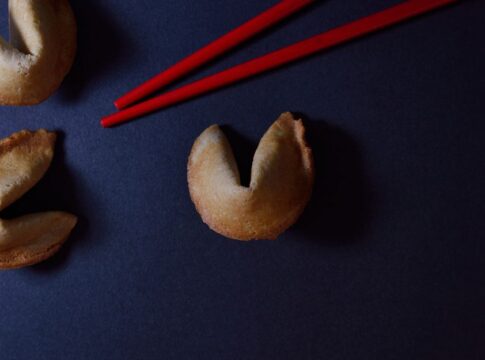
The Truth About Fortune Cookies: Not Actually Chinese
By Trivia Daily, Staff Writer — Published September 6, 2026
Table of Contents
- Key Takeaways
- The Truth About Fortune Cookies and Their Japanese Roots
- Discover the Fortune Cookie’s Journey to Ubiquity
- Interesting Facts About Fortune Cookies in China
- Explore the Cultural Significance and Myths
- The Fortune Cookie Manufacturing Process
- Frequently Asked Questions
You crack open a crispy cookie at the end of your Chinese restaurant meal, unfold the little paper slip inside, and read your “fortune.” This ritual feels authentically Chinese, doesn’t it? Here’s a surprising truth: fortune cookies aren’t Chinese at all. They’re actually an American invention, and most people in China have never even seen one. This fascinating food myth reveals how cultural traditions can be created, adopted, and transformed in unexpected ways.
The truth about fortune cookies is that they were likely invented in California in the early 20th century, though the exact origin remains disputed. What’s not disputed is that fortune cookies became a staple of Chinese-American restaurants across the United States while remaining virtually unknown in China itself. This curious culinary creation tells an amazing story about immigration, adaptation, and the blending of cultures in America.
Key Takeaways
- Fortune cookies were invented in California, not China, and are rarely found in actual Chinese restaurants in China.
- The cookies likely originated in Japanese-American communities in California between 1907 and 1914.
- During World War II, when Japanese Americans were sent to internment camps, Chinese restaurant owners adopted fortune cookies and they became associated with Chinese cuisine.
- The modern fortune cookie industry produces approximately 3 billion cookies annually in the United States.
- Traditional Japanese tea cookies called tsujiura senbei closely resemble fortune cookies and predate the American version by centuries.
- Fortune cookies didn’t appear in China until the 21st century, when they were marketed as an American novelty item.
The Truth About Fortune Cookies and Their Japanese Roots
The most compelling evidence points to Japanese immigrants as the true inventors of fortune cookies. In Japan, a similar cookie called tsujiura senbei has been made near Kyoto temples since at least the 19th century. These cookies are larger, darker, and made with sesame and miso rather than vanilla, but the concept is identical: a folded wafer cookie containing a fortune.
Several California establishments claim to be the birthplace of the American fortune cookie. The Japanese Tea Garden in San Francisco’s Golden Gate Park began serving similar cookies around 1907 or 1914. Meanwhile, the Hong Kong Noodle Company in Los Angeles also stakes a claim to the invention. What’s clear is that Japanese immigrants adapted their traditional cookie for American tastes, creating a lighter, sweeter version.
The cookies were originally served at Japanese restaurants in California. So how did they become synonymous with Chinese food? The answer lies in one of America’s darkest chapters. When Japanese Americans were forced into internment camps during World War II, their businesses shuttered. Chinese restaurant owners saw an opportunity and began offering fortune cookies to their customers. By the time Japanese Americans returned from the camps, fortune cookies had become firmly associated with Chinese cuisine in the American mind.
Discover the Fortune Cookie’s Journey to Ubiquity
After World War II, fortune cookies spread rapidly across the United States. Chinese restaurants, which were growing in popularity, embraced them as an inexpensive way to end a meal on a sweet, memorable note. The cookies were fun, exotic-seeming to American diners, and cost pennies to produce.
The fortune cookie industry became increasingly automated in the 1960s. Edward Louie of the Lotus Fortune Cookie Company in San Francisco invented a machine that could insert fortunes and fold cookies automatically, dramatically increasing production capacity. Before automation, workers had to fold each cookie by hand while still hot—a process that required speed and heat-resistant fingers.
Today, the vast majority of fortune cookies consumed in America come from a handful of manufacturers. Wonton Food Company in New York produces roughly 4.5 million fortune cookies daily, making it one of the largest producers in the world. These factories employ writers to compose the fortunes, blending inspirational messages, lucky numbers, and occasionally, Chinese language lessons on the reverse side.
Interesting Facts About Fortune Cookies in China
When fortune cookies finally arrived in China in the early 2000s, they flopped spectacularly. Chinese consumers found them too sweet, not crispy enough, and bewildering in concept. Why would you want a cookie with paper inside? The fortunes themselves, often generic inspirational messages, didn’t resonate with Chinese cultural traditions of fortune-telling, which tend to be more complex and specific.
In Chinese bakeries and restaurants across China, you won’t find fortune cookies on the menu. Instead, traditional desserts include items like egg tarts, sesame balls, and sweet red bean pastries. The absence of fortune cookies in China surprises many Western travelers who assumed they were encountering authentic Chinese cuisine back home.
Some entrepreneurs have tried marketing fortune cookies in China as an “American” novelty, with limited success. The cookies are sometimes found in expat-oriented establishments or specialty shops catering to curious locals, but they remain a curiosity rather than a staple.
Explore the Cultural Significance and Myths
Fortune cookies represent a fascinating case of reverse cultural assumption. Americans eating at Chinese restaurants believed they were participating in an authentic Chinese tradition, when in fact they were experiencing a purely American invention. This myth persisted for decades, rarely questioned because it seemed plausible and fit expectations about “exotic” Asian customs.
The cookies also reflect broader patterns in immigrant cuisine. Chinese restaurants in America adapted their menus to American tastes, creating dishes like chop suey, General Tso’s chicken, and fortune cookies that would be unrecognizable in China. These adaptations weren’t deceptive—they were survival strategies and creative responses to a new market.
Fortune cookies have evolved beyond restaurants. They appear at weddings with personalized messages, at corporate events with company slogans, and even in marriage proposals where the ring is hidden inside a specially-made oversized cookie. The simple concept has proven remarkably adaptable to American celebration culture.
The Fortune Cookie Manufacturing Process
Modern fortune cookies are made from a simple batter of flour, sugar, vanilla, and oil. The mixture is poured onto hot griddles in circular shapes, then baked until golden. The critical moment comes immediately after baking, when the cookies are still pliable. A mechanical arm places the fortune slip on the hot cookie, then rapidly folds it in half and bends it over a metal bar to create the distinctive shape.
Timing is everything. The cookies harden within seconds of cooling, so the entire folding process must happen in a narrow window. Early fortune cookie makers developed impressive hand speed and heat tolerance. Even with modern machinery, the process requires precision timing and temperature control.
The fortunes themselves are printed on thin paper strips, traditionally measuring about 3.5 inches long and half an inch wide. Writers create thousands of different messages, avoiding anything too specific or potentially offensive. The goal is universal appeal—fortunes that anyone can find personally meaningful through their own interpretation.
Frequently Asked Questions
Are fortune cookies actually Chinese?
No, fortune cookies are not Chinese. They were invented in California by Japanese immigrants in the early 1900s and later became associated with Chinese restaurants in America. Fortune cookies are virtually unknown in China itself.
When did fortune cookies become popular in America?
Fortune cookies became widespread in American Chinese restaurants during and after World War II, when Chinese restaurant owners adopted them after Japanese Americans were sent to internment camps. They grew in popularity throughout the 1950s and 1960s as automation made mass production possible.
What are the cookies called in Japan that inspired fortune cookies?
The Japanese cookies that inspired American fortune cookies are called tsujiura senbei. These traditional crackers are larger, darker, and made with sesame and miso, and they’ve been produced near Kyoto temples for centuries.
How many fortune cookies are made each year?
Approximately 3 billion fortune cookies are produced annually in the United States. The largest manufacturers can produce millions of cookies daily to supply Chinese restaurants across the country.
The next time you crack open a fortune cookie, you’ll know you’re participating in a uniquely American tradition—one that reveals how culture, food, and identity blend in unexpected ways. Sometimes the most “authentic” experiences turn out to be the most recently invented, shaped by immigration, adaptation, and a bit of historical accident.