
Why Popcorn Pops: The Science Behind the Kernel Explosion
By Trivia Daily, Staff Writer — Published July 28, 2026
Table of Contents
- Key Takeaways
- The Anatomy of a Popcorn Kernel
- The Physics of the Pop: Heat, Pressure, and Expansion
- Why Only Popcorn Pops
- Common Popcorn Myths and Surprising Truths
- Popcorn Varieties and Popping Performance
- Frequently Asked Questions
Every kernel of popcorn is a tiny pressure cooker waiting to explode. When you toss a handful into hot oil or a microwave bag, you’re witnessing one of nature’s most satisfying transformations. The science behind why popcorn pops involves a perfect storm of moisture, starch, and hull strength that turns an ordinary seed into a fluffy snack. Understanding the popcorn pops science reveals fascinating facts about plant biology, physics, and why this particular grain has captivated humans for thousands of years.
Unlike other grains, popcorn kernels possess a unique combination of characteristics that make the pop possible. The secret lies in their tough outer shell and the precise moisture content locked inside. This delightful everyday wonder has surprising depth when you explore what’s actually happening at the molecular level.
Key Takeaways
- Popcorn kernels contain about 13-14% moisture trapped inside a hard, non-porous hull that acts like a pressure vessel.
- When heated to approximately 356°F (180°C), the water inside turns to steam and builds pressure up to 135 psi before the kernel explodes.
- The starchy interior (endosperm) gelatinizes under heat and pressure, then rapidly expands and solidifies into the familiar white foam structure.
- Only Zea mays everta, a specific variety of corn, has the hull strength and moisture balance necessary for popping.
- A popcorn kernel can jump up to three feet in the air when it pops, and the “pop” sound occurs when steam escapes the hull.
- Unpopped kernels, called “old maids,” typically have cracks in their hulls or insufficient moisture content.
The Anatomy of a Popcorn Kernel
Each popcorn kernel is essentially a self-contained popping machine. The hard outer shell, called the pericarp or hull, is made of cellulose and is significantly stronger than the hulls of other corn varieties. This hull must be tough enough to withstand tremendous internal pressure without cracking prematurely.
Inside the hull sits the endosperm, a starchy substance that makes up most of the kernel’s interior. This starch contains both hard and soft components that behave differently under heat. Nestled within this starchy matrix is a small amount of water—roughly 13 to 14 percent of the kernel’s weight. Too much moisture and the kernel becomes soggy; too little and it won’t generate enough steam pressure to pop.
At the heart of each kernel lies the germ, the embryonic plant that would sprout if the seed were planted. While the germ doesn’t play a direct role in popping, it contributes to the kernel’s overall structure and nutritional content. The interplay between these components creates the conditions for the explosive transformation we associate with popcorn.
The Physics of the Pop: Heat, Pressure, and Expansion
When you heat a popcorn kernel, you’re initiating a dramatic sequence of physical changes. As the temperature rises, the water molecules inside begin moving faster and faster. Around 212°F (100°C), this water would normally boil and turn to steam, but the hard hull prevents escape.
The trapped steam continues building pressure as temperatures climb. The starch granules in the endosperm simultaneously begin to soften and gelatinize, transforming into a pliable, gel-like substance. This process is crucial—without it, the kernel would simply crack and release steam without the characteristic fluffy expansion.
At approximately 356°F (180°C), the pressure inside reaches a critical threshold of about 135 pounds per square inch. The hull can no longer contain the force. It ruptures violently, and the superheated, gelatinized starch explodes outward. The sudden pressure drop causes the moisture to flash into steam, expanding the starch to 40 to 50 times its original volume in a fraction of a second.
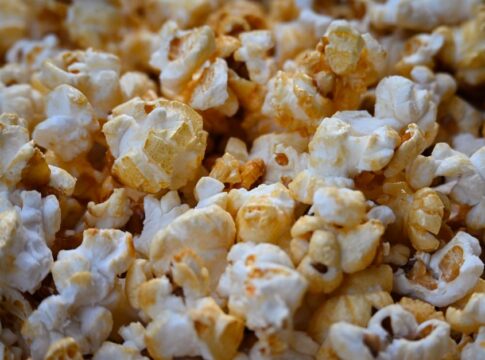
As the expanded starch hits cooler air, it solidifies almost instantly into the foam-like structure we recognize as popped corn. The entire process, from intact kernel to fully popped fluff, takes less than a second. The distinctive “pop” sound comes from the rapid release of steam and the hull breaking.
Why Only Popcorn Pops
You might wonder why regular sweet corn or field corn doesn’t pop when heated. The answer lies in hull strength and moisture distribution. Popcorn (Zea mays everta) has evolved or been selectively bred to have an exceptionally hard, moisture-resistant hull. Other corn varieties have softer, more porous hulls that simply crack and release steam gradually rather than building up explosive pressure.
The starch composition also differs. Popcorn contains a higher proportion of hard starch that gelatinizes properly under pressure. Sweet corn and field corn lack this precise balance, so even if their hulls were tough enough, the interior wouldn’t expand correctly.
Archaeological evidence suggests humans have been enjoying popcorn for at least 5,600 years, with ancient popped kernels discovered in caves in New Mexico. Indigenous peoples of the Americas cultivated and perfected popcorn varieties long before European contact, recognizing the unique properties that made certain corn varieties suitable for popping.
Common Popcorn Myths and Surprising Truths
Many people believe that popcorn and regular corn are the same plant, but this isn’t accurate. While both are varieties of Zea mays, popcorn is a distinct subspecies with different physical properties. You cannot successfully pop corn on the cob from your garden unless you’ve specifically planted popcorn varieties.
Another common misconception is that older popcorn pops better. The opposite is true. As popcorn ages, it gradually loses moisture through microscopic imperfections in the hull. Kernels with moisture content below about 11% won’t generate enough steam pressure to pop properly, resulting in more “old maids”—the industry term for unpopped kernels.
Some claim that storing popcorn in the freezer keeps it fresh. While cold storage can slow moisture loss, freezing isn’t necessary and can actually introduce moisture problems if kernels aren’t properly sealed. Room temperature storage in an airtight container maintains optimal popping conditions for most popcorn.
Popcorn Varieties and Popping Performance
| Popcorn Type | Shape When Popped | Characteristics |
|---|---|---|
| Butterfly (Snowflake) | Irregular, multi-directional wings | Tender, light texture; holds toppings well; most common commercial variety |
| Mushroom | Round, compact ball | Denser, sturdier; resists breakage; preferred for candy coatings |
| Rice | Long, slender shape | Smaller kernels; pointed shape; traditional heirloom variety |
| Pearl | Small, rounded | Tiny kernels; smooth, round when popped; specialty variety |
The shape a kernel takes when popped depends on how the starch expands and where the hull ruptures. Butterfly popcorn tends to have weaker hulls that break in multiple places, creating the irregular wings. Mushroom popcorn has a stronger hull that holds together longer, forcing the expansion into a more uniform ball shape.
Frequently Asked Questions
What temperature does popcorn pop at?
Popcorn kernels pop at approximately 356°F (180°C) when the internal pressure reaches about 135 psi. The hull ruptures at this temperature, causing the rapid expansion of the gelatinized starch inside.
Why do some kernels not pop?
Unpopped kernels, or “old maids,” usually have tiny cracks in their hulls that allow steam to escape gradually, preventing pressure buildup. They may also have insufficient moisture content (below 11-12%) to generate enough steam for popping.
Can you pop regular corn like sweet corn or field corn?
No, regular corn varieties lack the hard, non-porous hull and specific starch composition required for popping. Only Zea mays everta (popcorn) has the combination of hull strength and starch properties necessary for the explosive expansion.
How much does popcorn expand when it pops?
Popcorn typically expands to 40 to 50 times its original volume when popped. A single kernel measuring a few millimeters can transform into a piece of popped corn measuring several centimeters across, depending on the variety and popping conditions.
The next time you watch kernels transform in your microwave or on the stovetop, you’re observing a remarkable intersection of botany, physics, and chemistry. Each pop represents thousands of years of plant evolution and human cultivation, all compressed into a split-second explosion that turns a hard seed into an airy snack. It’s a small miracle happening in your kitchen, powered by nothing more than heat, water, and the incredible engineering of a tiny kernel.