
Why Does Shampoo Lather More on the Second Wash Cycle
By Trivia Daily, Staff Writer — Published October 20, 2026
Table of Contents
- Key Takeaways
- The Chemistry Behind Shampoo Lather and the Second Wash
- What’s Actually on Your Hair Before You Shampoo
- The Truth About Lather and Cleaning Power
- Comparing Single Wash vs. Double Wash Results
- When You Actually Need That Second Wash
- Frequently Asked Questions
Anyone who has ever followed the “lather, rinse, repeat” instructions on a shampoo bottle has noticed something curious: the second wash produces far more foam than the first. This isn’t your imagination or a trick of marketing—it’s a fascinating interplay of chemistry, surface tension, and the surprising amount of oil and debris hiding in your hair. The reason shampoo lather increases on the second wash reveals truths about how surfactants work and why clean hair behaves differently than dirty hair.
This everyday phenomenon offers a window into the science of cleaning agents and the biology of human hair. Understanding why this happens can help you shampoo more effectively and even save money by adjusting your washing routine.
Key Takeaways
- Shampoo lather is created by surfactant molecules that reduce water’s surface tension, but oils and dirt on hair interfere with this process during the first wash.
- The first wash cycle removes most sebum, dead skin cells, styling products, and environmental pollutants that prevent foam formation.
- Once hair is partially clean, surfactants can form stable bubbles more easily, producing abundant lather on the second application.
- Human scalps produce sebum continuously, with some people generating more oil than others based on genetics, hormones, and environment.
- The “lather, rinse, repeat” instruction was originally a marketing strategy but does have a scientific basis for thoroughly cleaning very dirty hair.
- You can achieve adequate cleanliness with a single wash if your hair isn’t heavily soiled, making the second wash optional for many people.
The Chemistry Behind Shampoo Lather and the Second Wash
Shampoo contains surfactants—molecules with a water-loving (hydrophilic) head and an oil-loving (hydrophobic) tail. These clever compounds position themselves at the boundary between water and oil, allowing substances that normally don’t mix to combine. When you massage shampoo into wet hair, the hydrophobic tails attach to oils and dirt while the hydrophilic heads remain in the water, suspending the grime so it can be rinsed away.
Lather forms when surfactants reduce water’s surface tension enough to trap air in thin films, creating bubbles. But here’s the catch: when your hair is coated with sebum, styling products, and accumulated debris, surfactant molecules get busy attaching to all that oil and dirt. They’re working, not foaming. The surfactants prioritize their cleaning job over bubble formation, leaving you with disappointing suds.
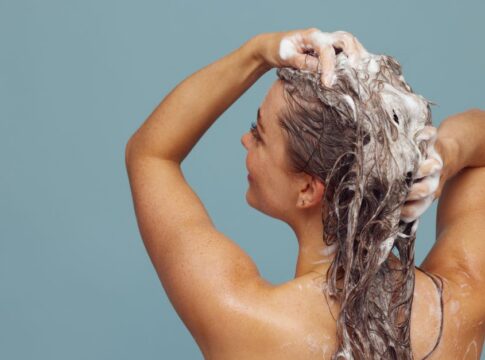
After rinsing, most of the oil and grime washes down the drain. The second application of shampoo encounters hair that’s already partially clean. With less oil to combat, the surfactants can now perform their secondary party trick: creating luxurious foam. This abundant lather doesn’t necessarily mean your hair is getting cleaner—it means it’s already mostly clean.
What’s Actually on Your Hair Before You Shampoo
Human scalps are remarkably productive oil factories. Sebaceous glands attached to hair follicles secrete sebum, a complex mixture of triglycerides, fatty acids, wax esters, and cholesterol. This natural oil protects your scalp and hair, but it also collects dust, pollution particles, and dead skin cells throughout the day.
If you use styling products—gels, mousses, hairsprays, or leave-in conditioners—you’re adding another layer of substances that need removal. These products often contain silicones, polymers, and oils designed to stick to hair strands. Even if you don’t use products, your hair accumulates airborne pollutants, pollen, and microscopic particles from your environment.
The amount of buildup varies dramatically between individuals. People with oily skin tend to have oilier scalps. Hormonal changes, stress levels, diet, and even weather conditions affect sebum production. Someone who exercises daily and lives in a humid, polluted city will have more buildup than someone in a dry, clean environment with a sedentary lifestyle.
The Truth About Lather and Cleaning Power
Here’s a surprising fact that contradicts common assumptions: more lather doesn’t mean more cleaning power. Foam is essentially a visual and tactile indicator that surfactants are available and active, but the actual cleaning happens at the molecular level, not in the bubbles themselves.
Many people have been conditioned to associate abundant suds with effective cleaning, a perception that detergent and shampoo manufacturers have cultivated for decades. In reality, surfactants clean just as effectively with minimal foam. Some modern shampoos designed for hard water or specific hair types produce less lather by design but clean equally well.
The second wash does remove some additional residue that the first wash loosened but didn’t completely eliminate. However, for most people with moderately clean hair, a single thorough wash provides adequate cleansing. The second wash offers diminishing returns unless your hair was exceptionally dirty to begin with.
Comparing Single Wash vs. Double Wash Results
| Factor | Single Wash | Double Wash |
|---|---|---|
| Cleaning Effectiveness | Removes 80-90% of oil and debris | Removes 95-98% of oil and debris |
| Lather Production | Minimal to moderate | Abundant on second application |
| Time Required | 2-3 minutes | 5-6 minutes |
| Product Usage | One application | Double the product |
| Best For | Daily washing, light buildup | Heavy product use, infrequent washing |
When You Actually Need That Second Wash
Not everyone needs to wash twice. If you shampoo daily and don’t use heavy styling products, a single wash typically suffices. Your hair simply doesn’t accumulate enough buildup between washes to require double cleaning.
However, certain situations call for the full lather-rinse-repeat treatment:
- After swimming in chlorinated pools or salt water, which leaves mineral deposits and chemicals in hair
- When you’ve used heavy styling products like pomades, waxes, or strong-hold hairsprays
- If you wash your hair infrequently (every three or more days), allowing significant sebum buildup
- After exposure to smoke, strong cooking odors, or industrial environments
- Following the use of dry shampoo, which deposits powder or starch that needs thorough removal
People with very fine or oily hair may find that double washing helps control excess oil production over time, though this remains somewhat controversial among dermatologists. Those with thick, curly, or dry hair often benefit from less frequent washing and might find double shampooing unnecessarily harsh.
Frequently Asked Questions
Does the type of shampoo affect how much it lathers?
Yes, sulfate-based shampoos produce more lather than sulfate-free formulas, but both clean effectively. The surfactant type determines bubble formation, not cleaning power.
Why do some shampoos say “repeat” on the bottle?
The “lather, rinse, repeat” instruction became popular in the 1930s and increased product consumption. While it has some scientific merit for very dirty hair, it was partly a marketing strategy to sell more shampoo.
Can you get your hair clean without any lather at all?
Absolutely. Many low-lather and no-lather cleansing products clean hair effectively through surfactant action alone. Foam is not required for the chemical process of removing oils and dirt.
Does hard water affect shampoo lather?
Hard water contains calcium and magnesium ions that bind with surfactants, reducing their ability to create lather and clean effectively. You’ll notice less foam in hard water even on the second wash, though the shampoo still works.
The next time you notice that satisfying explosion of foam on your second shampoo application, you’ll know you’re witnessing chemistry in action—not better cleaning, but cleaner hair allowing surfactants to do what they do best: make bubbles. That first disappointing lather was actually your shampoo working hardest, tackling the invisible layer of life that accumulates on every strand.