
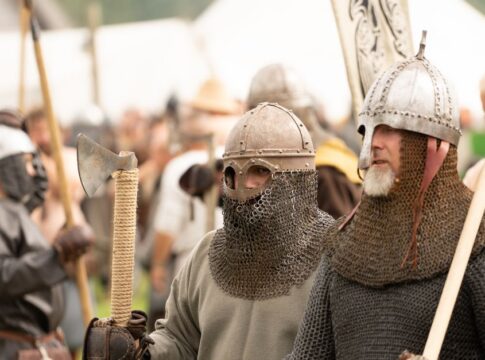
The Truth About Vikings: They Never Wore Horned Helmets
By Trivia Daily, Staff Writer — Published September 6, 2026
Table of Contents
- Key Takeaways
- The Truth About Vikings Never Wearing Horns: What Archaeology Actually Shows
- Where the Horned Helmet Myth Actually Came From
- The Real Viking Helmets Versus the Fantasy
- Why Horned Helmets Would Have Been Terrible in Battle
- What Vikings Actually Wore and How They Really Looked
- Frequently Asked Questions
Picture a Viking warrior, and chances are you’re imagining a fierce Norseman sporting a helmet adorned with dramatic curved horns. That iconic image appears everywhere—from cartoons to Halloween costumes to sports team logos. Here’s the surprising truth: Vikings never wore horned helmets into battle. This persistent myth has become one of history’s most enduring visual misconceptions, and the real facts about Viking headgear reveal something far more interesting than the fantasy we’ve all been sold.
The truth about Vikings and their helmets exposes how easily fiction can eclipse historical reality. Not a single authentic Viking helmet with horns has ever been discovered by archaeologists. Zero. The few Viking-era helmets that have survived the centuries are remarkably practical—simple, rounded iron caps designed for actual combat, not theatrical flair.
Key Takeaways
- No archaeological evidence supports Vikings wearing horned helmets; all authentic Viking helmets found are horn-free and functional.
- The horned helmet myth likely originated in 19th-century Romantic art and opera costume design, particularly Wagner’s Ring Cycle productions.
- Only one complete Viking helmet has ever been discovered—the Gjermundbu helmet from Norway, dating to the 10th century, featuring a simple rounded design with a nose guard.
- Horned helmets would have been dangerously impractical in battle, providing opponents with something to grab while compromising structural integrity.
- Bronze Age ceremonial helmets with horns do exist from pre-Viking Scandinavia, but these date back over 1,000 years before the Viking Age and served ritual purposes.
- The Viking Age lasted roughly from 793 to 1066 CE, yet the horned helmet image didn’t become widespread until the 1800s.
The Truth About Vikings Never Wearing Horns: What Archaeology Actually Shows
Archaeological evidence paints a clear picture. The Gjermundbu helmet, discovered in Norway in 1943, remains the only complete Viking helmet ever found. This 10th-century artifact features a rounded iron bowl with a simple nose guard and eye openings—utterly practical and completely horn-free. Fragments of other Viking helmets discovered across Scandinavia follow the same pattern: functional protection without decorative protrusions.
Why so few helmets? Metal was valuable in Viking society, and iron helmets were expensive items that likely belonged to wealthy warriors or chieftains. When Vikings died, their metal possessions were often melted down and reused rather than buried. The helmets that did make it into graves corroded over centuries, leaving precious little for modern archaeologists to study.
The helmets that have survived tell us Vikings prioritized effectiveness over intimidation. A well-designed helmet needed to deflect blows, protect the skull, and stay securely on the wearer’s head during violent combat. Horns would undermine all three objectives while adding unnecessary weight and manufacturing complexity.
Where the Horned Helmet Myth Actually Came From
The blame for this enduring misconception falls largely on 19th-century Romanticism. As European artists and writers became fascinated with medieval and ancient cultures, they took creative liberties with historical accuracy. Swedish artist August Malmström created paintings in the 1800s depicting Vikings with horned helmets, helping cement the image in popular imagination.
The myth received its biggest boost from opera. When composer Richard Wagner created his epic Ring Cycle in the 1870s, costume designer Carl Emil Doepler outfitted the characters with horned helmets to create a more dramatic, “barbaric” visual. These opera productions toured internationally, spreading the horned helmet image far beyond Scandinavia. The striking costumes proved more memorable than historical accuracy.
Earlier still, ancient Roman and Greek writers sometimes described northern European tribes wearing animal horns or antlers in ceremonial contexts. These descriptions—often exaggerated or misunderstood—may have contributed to later confusion about Viking battle gear. But ceremonial headgear worn for rituals bears little resemblance to practical combat equipment.
The Real Viking Helmets Versus the Fantasy
| Feature | Mythical Horned Helmet | Authentic Viking Helmet |
|---|---|---|
| Horns or Protrusions | Large curved horns or wings | None—completely smooth profile |
| Design Purpose | Intimidation and decoration | Deflecting blows and protecting the head |
| Material | Often depicted as polished metal with decorative elements | Simple iron construction, sometimes with brass wire decoration |
| Combat Practicality | Dangerous—horns could be grabbed or caught | Highly practical for actual warfare |
| Archaeological Evidence | Zero examples found | Fragments found; one complete example (Gjermundbu) |
Why Horned Helmets Would Have Been Terrible in Battle
Any experienced warrior would recognize horned helmets as liabilities. In close combat, protruding horns give opponents convenient handles to grab, twist, and use to wrench a warrior’s head around or pull them off balance. A Viking shield wall demanded tight formation fighting where unwieldy headgear would catch on shields, weapons, and fellow warriors.
Structural concerns matter too. Each horn creates weak points in the helmet’s integrity. A solid blow to a horn would transfer tremendous force directly to the skull—exactly what helmets are designed to prevent. The rounded shape of authentic Viking helmets helps deflect strikes away from the head. Horns would redirect impact force inward instead.
Weight distribution presents another problem. Horns add mass high above the head’s center of gravity, creating neck strain during long battles or marches. Viking warriors needed to stay alert and mobile for hours. Every ounce of unnecessary weight mattered.
What Vikings Actually Wore and How They Really Looked
Most Viking warriors probably fought without helmets at all. The expense of forging iron helmets put them out of reach for common fighters, who relied instead on leather caps or fought bare-headed. Wealthier Vikings who could afford helmets wore simple, conical or rounded designs, sometimes with chainmail aventails to protect the neck.
Viking appearance emphasized practicality across the board. They wore tunics and trousers suitable for cold Scandinavian climates and long sea voyages. Chainmail shirts provided body protection for those who could afford them. Shields—round wooden disks with iron bosses—served as the primary defensive equipment for most warriors.
Their weapons tell us more about Viking priorities than any helmet could. They favored axes, spears, and swords—tools that required speed, skill, and mobility. The fighting style that made Vikings formidable across Europe depended on agility and coordinated tactics, not theatrical intimidation.
Frequently Asked Questions
Did any ancient cultures actually wear horned helmets in battle?
Some Bronze Age ceremonial helmets from Scandinavia (dating 1000+ years before the Viking Age) featured horns, but these were likely used for religious rituals, not warfare. No evidence suggests any culture regularly wore horned helmets in actual combat due to the obvious tactical disadvantages.
When did people start thinking Vikings wore horned helmets?
The misconception became widespread in the 19th century through Romantic artwork and opera productions, particularly Wagner’s Ring Cycle in the 1870s. Before then, there was no strong association between Vikings and horned helmets in popular culture.
How many real Viking helmets have archaeologists found?
Only one complete Viking helmet—the Gjermundbu helmet from 10th-century Norway—has been discovered. Fragments of several others exist, but intact examples are extraordinarily rare due to metal corrosion and the practice of recycling valuable iron.
Why does the horned helmet myth persist despite the evidence?
The image has become deeply embedded in popular culture through countless movies, cartoons, team mascots, and commercial products. Visually striking myths often prove more memorable than historical accuracy, and the horned helmet has become a convenient shorthand for “Viking” in modern media.
The next time you see a horned helmet labeled as Viking gear, you’ll know the real story. This enduring myth reminds us how easily theatrical imagination can overwrite historical truth—and how important it is to question even our most familiar cultural images. The actual Vikings were fascinating enough without the decorative fiction.